If you’ve noticed a patch of hard skin on your foot, you might be wondering whether it’s a corn or a callus. Although they’re often confused, they’re not quite the same thing.
Both are common. The good news is that both corns and calluses are treatable. Knowing which one you have can help you understand what’s causing it and whether it’s time to seek professional treatment.
What is a Corn?
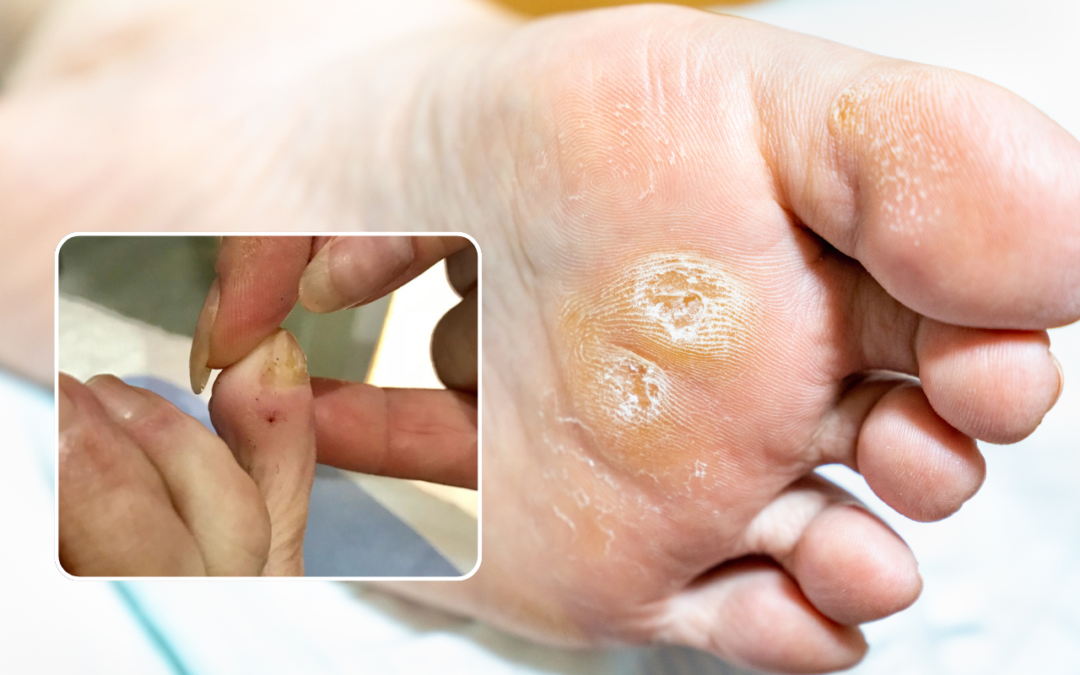
A corn is a small, localised area of hard skin that develops where there is repeated pressure or friction. Corns often have a hard central core that presses into the deeper layers of skin, which is why they can be surprisingly painful.
They commonly develop:
- On the tops or sides of toes
- Between the toes (soft corns)
- On the ball of the foot
- Over bony prominences
Many people describe the feeling as though they’re “walking on a small stone”.
What is a Callus?
A callus is a larger area of thickened skin that develops to protect your feet from repeated pressure or rubbing. Unlike a corn, a callus doesn’t have a central core.
Calluses are usually found on the heels, the balls of the feet, or the sides of the big toe.
They are often yellowish in colour and may feel rough or dry. While they aren’t always painful, very thick calluses can crack, become uncomfortable, or make walking difficult.
Corn vs Callus – What’s the Difference?
Both corns and calluses are caused by repeated pressure, but here are some key differences:
Corn |
Callus |
| ✅Small, well defined area | ✅Larger patch of thickened skin |
| ✅Has a hard central core | ✅Often painless, unless very thick |
| ✅Usually develops over a pressure point | ✅Forms over a wider area of friction |
| ✅Can feel like walking on a pebble | ✅Skin feels thick or rough |
Does it Matter?
Although both corns and calluses involve hard skin, the underlying cause isn’t always the same.
For example, a painful corn may develop because a toe rubs against a shoe or another toe. A callus may be caused by the way you walk, increased pressure under the foot, or footwear that doesn’t fit properly.
Simply trimming away the hard skin may provide temporary relief, but if the cause isn’t addressed, it’s likely to return.
A podiatrist can assess what’s causing the pressure and recommend the most appropriate treatment, whether that’s routine removal of the hard skin, footwear advice, pressure-relieving padding, or treatments such as Curacorn for suitable patients with persistent corns.
When Should You See a Podiatrist About Corns or Calluses?
You don’t need to live with painful feet. If your corn or callus is becoming increasingly painful, keeps coming back, or is making it uncomfortable to walk, it’s worth booking an appointment with a podiatrist.
You should also seek professional advice if you have diabetes or poor circulation and notice any new hard skin on your feet, or if over-the-counter treatments haven’t helped. Early treatment is often simpler, more comfortable, and can help prevent the problem from getting worse.
If you are looking for help with corns or callus, contact our Cambridge-based podiatry clinic today – we can help you. You can book online or call our friendly team on 01223 633 038. No referral needed.